Welcome:Shanghai Zhicai Electronic Technology co., LTD
Language:
 ∷
∷

∷
 ∷
∷

The LED display is a flat display screen composed of a light-emitting diode dot matrix module or a pixel unit. Because of its high luminous efficiency, long service life, flexible configuration, rich colors and strong adaptability to indoor and outdoor environments, since the late 1980s, with the continuous improvement of LED manufacturing technology, it has been widely used abroad. Applications. After China's reform and opening up, especially the rapid growth of the national economy in the 1990s, the demand for information release in public places has become increasingly strong. The appearance of LED displays has just adapted to this market situation, so the design and manufacturing technology and application of LED display screens The level has been improved rapidly.
LED displays have evolved from monochrome, two-color graphic displays to image displays, to today's full-color video displays. Significant progress has been made in terms of performance during the period (increased brightness LED display and blue light, etc.) and system components (computerized full dynamic display system). The level of ultra-high brightness full-color video display that has been achieved so far can be said to meet the requirements of various application conditions. Its application fields have spread all over the transportation, securities, telecommunications, advertising, publicity and other aspects.
1.1 LED display system components
The LED display system is composed of computer-specific equipment, display screen, video input port and system software.
(1) Computers and special equipment: Computers and special equipment directly determine the functions of the system, and different types can be selected according to different requirements of the system.
(2) Display screen: The control circuit of the display screen receives the display signal from the computer, drives the LED to generate the picture, and outputs the sound by adding the amplifier and the speaker.
(3) Video input port: Provide video input port, the signal source can be video recorder, DVD player, camera, etc., support NTSC, PAL, S Video and other formats.
(4) System software: Provide special software for LED playback, PowerPoint or ES98 video playback software. 1.2 LED display system function
The LED display system is a computer processing control center. The electronic screen and the computer display (VGA) window correspond to each other point by point. The display content is synchronized in real time, and the screen mapping position is adjustable, and the size of the display screen can be conveniently and randomly selected.
The display dot matrix adopts ultra-high brightness LED light-emitting tube (red and green double primary colors), 256-level gray scale, and 65,536 color change combinations, which are rich in color and vivid, and support VGA 24-bit true color display mode.
Equipped with graphic information and 3D animation playback software, it can play high-quality graphic information and 3D animation. There are more than ten forms of playing software to display information, such as covering, closing, opening, alternating colors, zooming in and out.
Use special program editing and playback software to edit, add, delete and modify text, graphics, images and other information through different input methods such as keyboard and mouse, scanner. The program is stored in the control host or server hard disk program. The playback sequence and time are integrated and alternately played and superimposed on each other. It can receive video signals such as video recorders and DVD players.
1.3 LED electronic display system introduction and classification
In recent years, the LED display market has developed rapidly, and has been widely applied to banks, post and telecommunications, taxation, airports, stations, securities markets and other trading markets, hospitals, electric power, customs, stadiums and other occasions where announcements and publicity are needed. .
LED is the abbreviation of Light Emitting Diode. The LED display is a display device composed of an array of light emitting diodes. It adopts low-voltage scanning drive, which has the advantages of low power consumption, long service life, low cost, high brightness, large viewing angle, long visible distance and many varieties. 1.4 LED display working principle
The LED display system mainly includes: a control computer (or a workstation in the network), video signal processing and control, communication transmission and control, data distribution and scanning control, and LED display box. 1.4.1 Control Computer
The control computer (or a workstation on the network) controls the display of the electronic display. It can run a program list written according to user needs and extract relevant display data on the computer's local hard disk or on the network server. Of course, the display effect of the LED screen can also be artificially generated. The pixels on the screen correspond to the pixel points on the corresponding areas of the screen control machine display, and are directly mapped.
Through the electronic display control computer, you can manually or automatically adjust the brightness, contrast, chromaticity, etc. of the display, select the gradation correction data suitable for the current environment, and control the computer to transmit the information to be displayed to the video signal processor and control unit for video. Information processing. 1.4.2 Video Signal Processing Control System
The video processing controller is a set of multimedia video cards dedicated to the LED display, which is used for image processing of display data. The video processing controller includes: gray scale adjustment, brightness adjustment, image noise reduction, motion compensation, and color coordinate space transformation. , chroma adjustment function, mosaic elimination, etc.
The video controller can pass the processed display information to the communication module for long distance transmission to the display. 1.4.3 Communication Transmission and Control
Windows provides users with two ways to implement serial communication:
(1) Using serial communication control: For serial communication, Microsoft provides MSComm control. It is very convenient to use this control for serial communication design. The programmer does not need to spend time to understand more complicated API parameters. By simply modifying the properties of the control and using the methods provided by the control, you can configure the serial port and complete the serial port receiving and sending data.
(2) Using the API API of Windows: In Windows, the serial port is opened and accessed as a file. Serial port and serial communication drivers need to be configured using device control blocks (DCB, Device, Control Block). The application uses the API function CreateFile to open the serial port, ReadFile to read the serial port, CreateEvent to create the event object and CloseHandle to close the serial port. It is very convenient to use the serial communication control to develop the serial port program. If you do not need advanced control of the serial port, you usually choose to use the MScomm control for development.
The communication system is connected to the control computer and display via 25 pairs of Super Category 5 twisted pair cables, which effectively ensures that the content displayed on the computer display is transmitted to the display. 1.4.4 Data Distribution and Scan Control
The basic scanning control principle of LED displays is dynamic scanning. Dynamic scanning is divided into two methods: row scanning and column scanning. The common method is line scanning. The line scanning method is further divided into 8 lines of scanning and 16 lines of scanning. In the line scan mode, each LED dot matrix has a set of column driver circuits, and there must be a latch or shift register in the column driver circuit for latching the font data of the content to be displayed. In the line scan mode, the same-row LED control pins of the same row of LEDs are connected in parallel on a line, a total of 8 lines, and finally connected to a row drive circuit; there must also be a row drive circuit A latch or shift register that latches the line scan signal.
The column driver circuit and the row driver circuit of the LED display are generally controlled by a single chip microcomputer, and the commonly used single chip microcomputer is the MCS51 series. The content displayed on the LED display is generally stored in the external data memory of the microcontroller in the form of a font. The font is an 8-bit binary number.
The control process of the MCU on the LED display screen is read and written first. According to the order of the LED dot matrix on the screen, the MCU first writes the font data read from the external data memory to the column drive latch of the first LED dot matrix in the first row, and then the second slice. The third film... After the last piece of the row has written the font data, the MCU writes the line scan signal to the row of row drive latches, so the first row of the first row is related to the font data. The diode lights up. Then the second row, the first row, the third row, the first row, ... until the last row of the first row is lit. After the first row of each row is lit, the delay is for a period of time, then the black screen, so that the single-chip scanning control of the LED display screen is completed.
The MCU scan control of the 2nd line of the LED display, the scanning control of the 3rd line... until the scanning control of the 8th line, the process is the same as the scanning control process of the 1st line. After the control process of all 8 lines is completed, the LED display completes the complete display of 1 frame image.
Although according to this working mode, the LED display is lit line by line, only one line is bright at a time, but as long as each line can be illuminated more than 50 times per second, that is, the refresh frequency is higher than 50 Hz, then The visual inertia, the image displayed on the LED display is still a full-screen stable image. One way to work is the system block diagram shown in Figure 1-1.
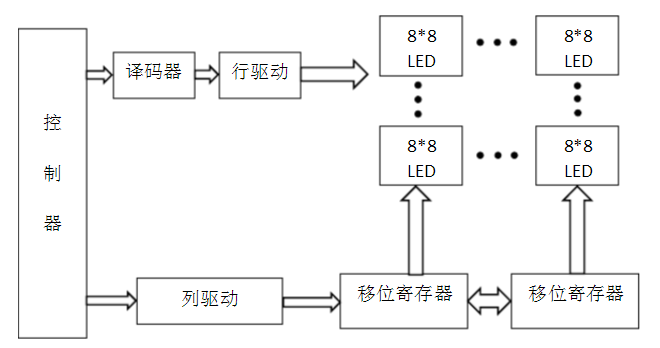
Figure 1-1 Control mode system block diagram
1.4.5 LED display box
LED display cabinet design has a variety of options, each with different advantages and disadvantages. (1) Dot matrix module solution
The earliest design proposal was developed from the indoor pseudo-color dot matrix screen.
Advantages: The raw material cost is the most advantageous, and the production and processing technology is simple and the quality is stable. Disadvantages: poor color consistency, more serious mosaic phenomenon, poor display effect. (2) Single lamp solution
In order to solve the problem of dot matrix color, a solution of outdoor display technology is used, and outdoor pixel multiplexing technology (also called pixel sharing technology, virtual pixel technology) is transplanted to the indoor display.
Advantages: Color consistency is better than dot matrix module.
Disadvantages: The color mixing effect is not good, the viewing angle is not large, and there is color difference in the horizontal direction. The processing is more complicated and the antistatic requirement is high. It is more difficult to achieve an actual pixel resolution of 10,000 points or more.
(3) Patching scheme
A patch light tube is used as a display element.
Advantages: Color consistency, viewing angle and other important display indicators are the best in the existing program, especially the three-in-one surface sticker color mixing effect is very good.
Disadvantages: The processing process is cumbersome and the cost is too high. (4) Sub-surface patching scheme
In fact, it is an improvement of the single lamp scheme, which is still being improved.
Advantages: There is little difference between the display of color consistency, viewing angle and other primary indicators and labeling schemes, but the cost is lower, the display effect is very good, and the resolution can theoretically achieve more than 17200.
Disadvantages: processing is more complicated, antistatic requirements are high
Contact:Tony fang
Phone:13512118719
Tel:4008209320; 021-36411816
Email:Tony@sh-gren.com
Add:Shanghai,Baoshan,Changyi road 188th,202 Room

 QQ Online